UK · England · North Yorkshire · Craven · In Chapel-le-Dale
Ingleborough
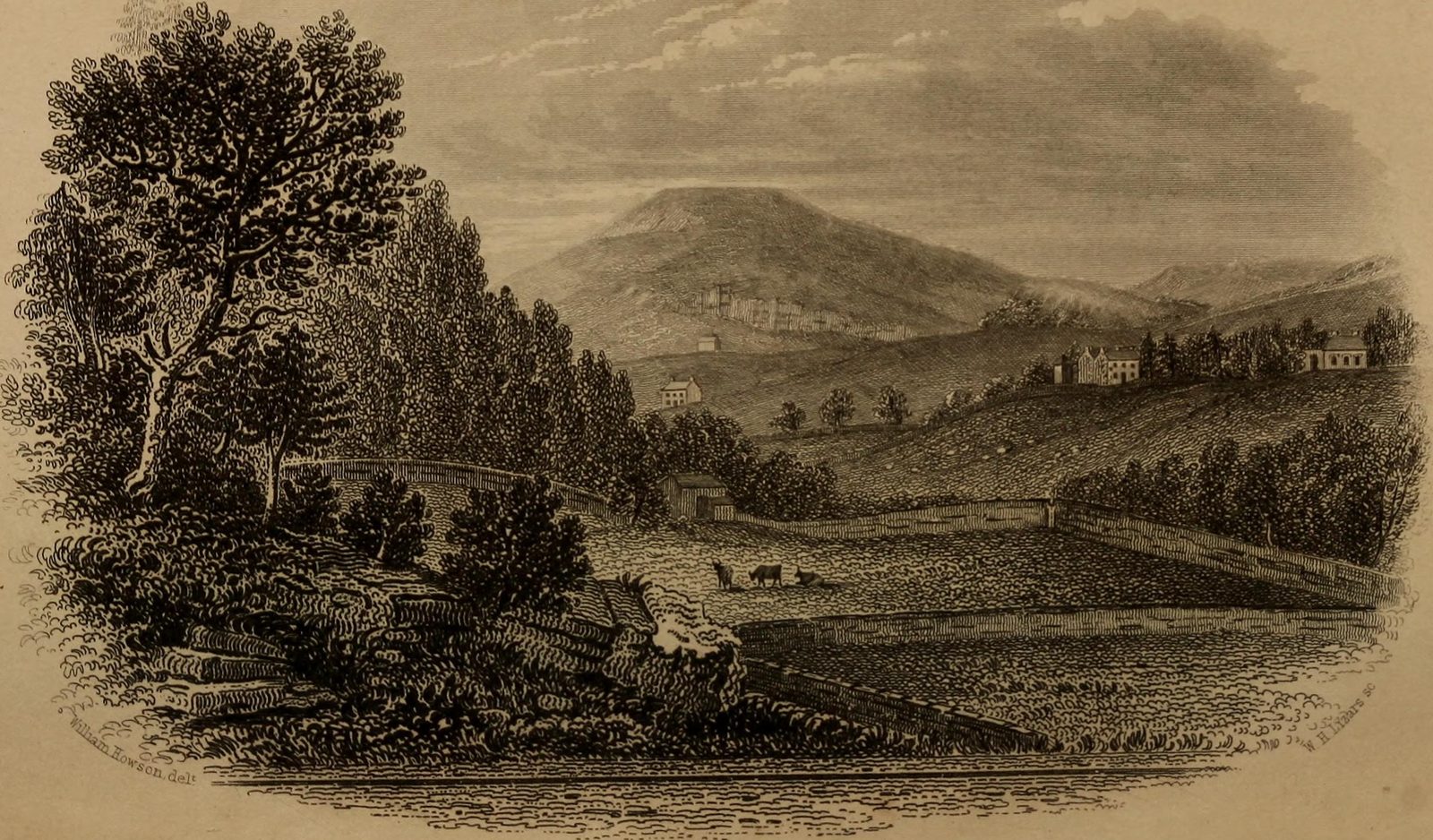
What the writers say
Writers from Camden in 1722 to Speight in 1892 describe its shape and argue about its height. Pennant thought it the highest ground in England, and Speight says the old writers overstated it. Hutton climbed it and saw the coast laid out like a map, and Speight describes 19 horse-shoe shaped huts inside a wall on the summit.
-
1585 · 1580 to 1590
“There is but one beacon in Yewcrosse standing upon a high mountain called Engleborough, within the parish of Engleton”
The Council of the North's list of beacons, orders for the beacons and trained bands at the time of the Spanish Armada. See the page
Source and note
Harry Speight, The Craven and North-West Yorkshire Highlands (London: Elliot Stock, 1892), page 300.
Yewcrosse is the wapentake of Ewcross, the north-west division beside Staincliffe.
-
1722 · 1722 English edition of Britannia (first published 1586)
“it shoots out in a vast ridge rising gradually to the westward, and towards the end mounts up as if another hill ... were laid upon the back of it.”
William Camden, antiquary. See the page
Source and note
Britannia, or a Chorographical Description of Great Britain and Ireland, English edition, vol. 2 (London, 1722), page cols. 971-972.
The cut is the word 'Penigent', a side-note that the scan prints inside the sentence.
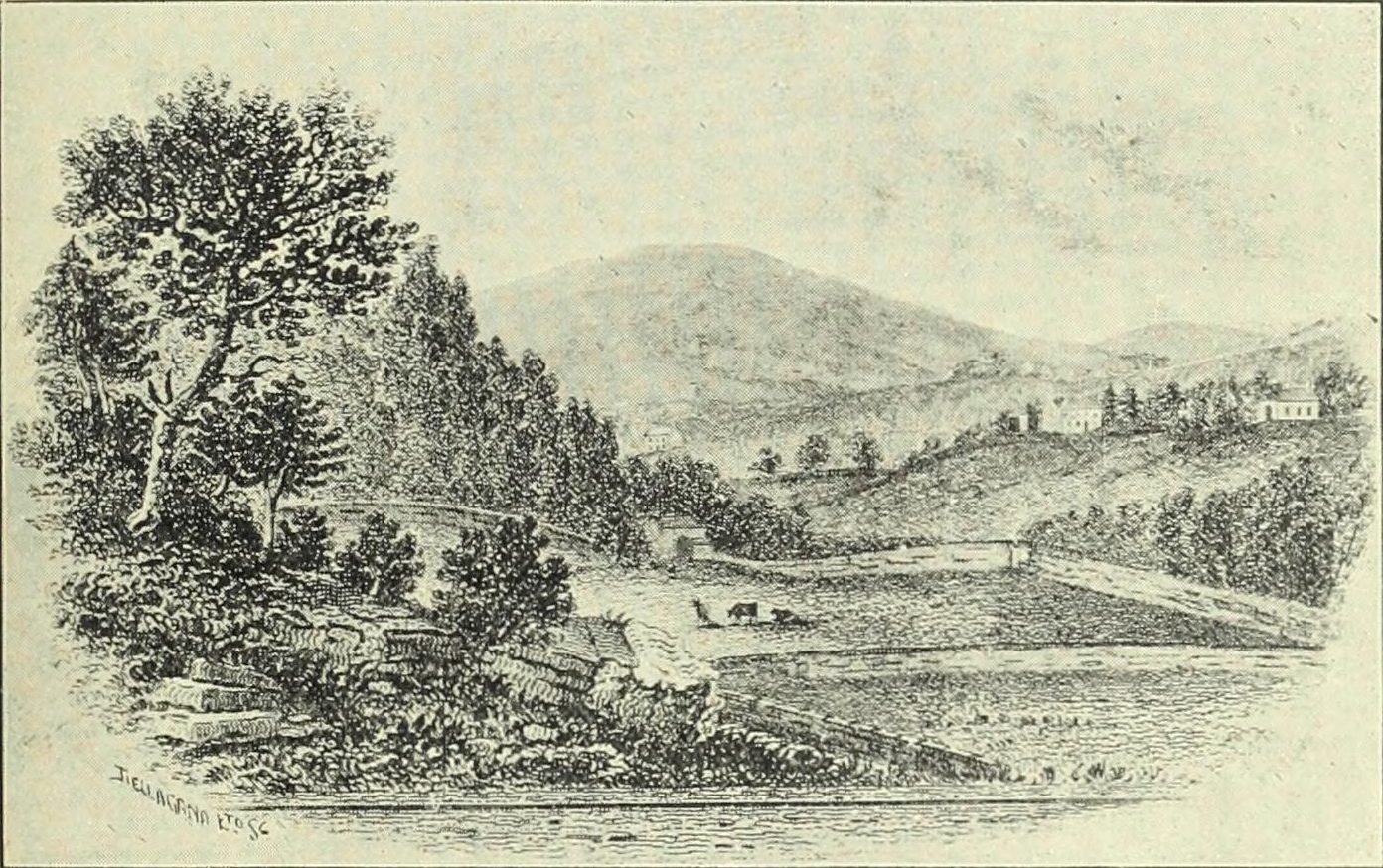
Ingleborough from the Railway, near Lawkland. From Harry Speight, The Craven and North-West Yorkshire Highlands (London: Elliot Stock, 1892). See the page -
1769 · 12 October 1769
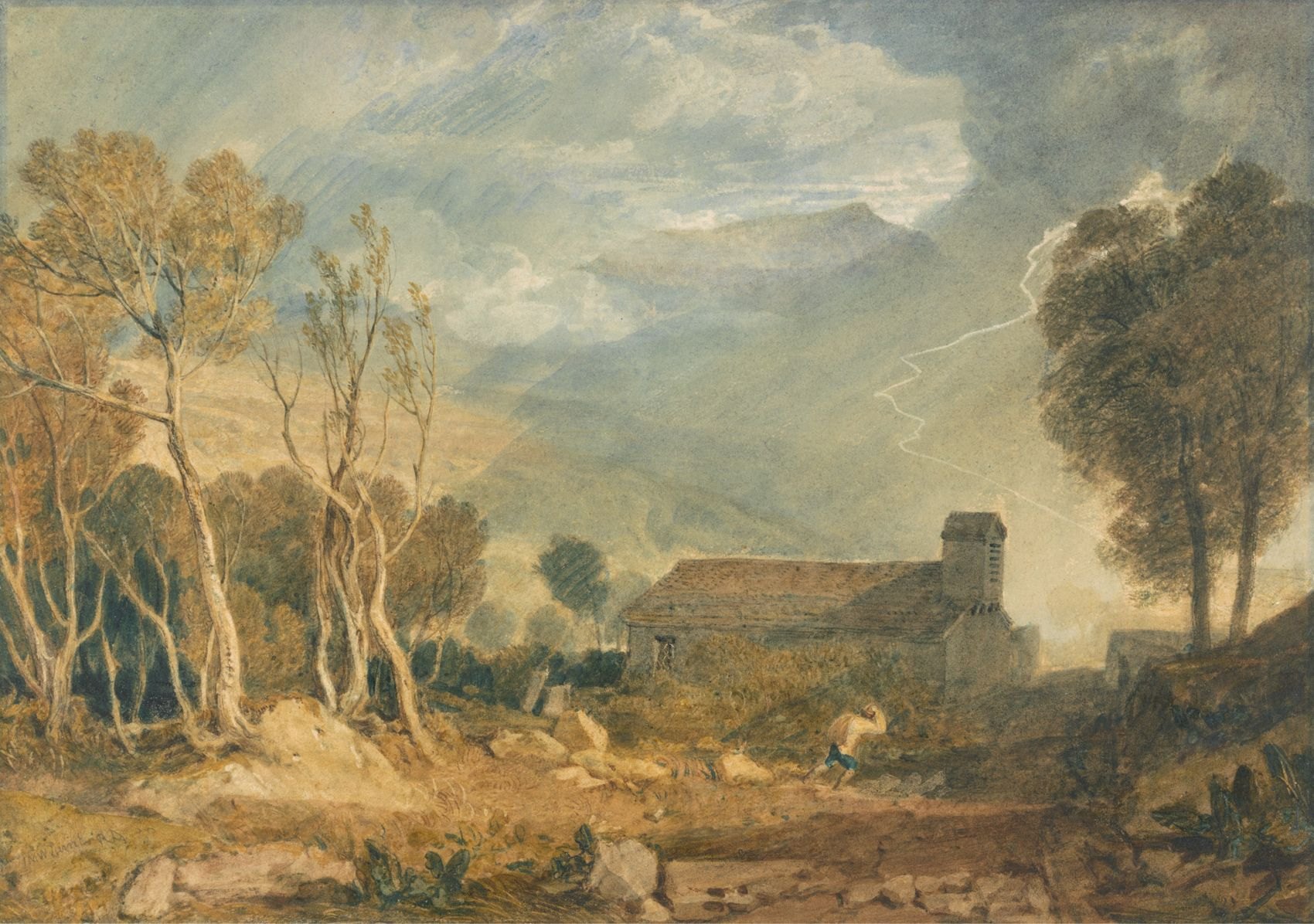
“Ingleborough, which I had seen before distinctly at Lancaster, to N:E: was now compleatly wrapt in clouds, all but its summit, which might have been easily mistaken for a long black cloud too, fraught with an approaching storm”
Thomas Gray, poet, touring the north. See the page
Source and note
Gray's journal of his tour, in The Letters of Thomas Gray, ed. Duncan C. Tovey, vol. III (London: G. Bell, 1912), page 260.
Gray saw it from the tower of Hornby Castle, on the road to Ingleton.
-
1773 · journey of 1773, printed 1801
“This is reckoned the highest ground in England in respect to the sea, and I believe with truth.”
Thomas Pennant, naturalist and travel writer. See the page
Source
A Tour from Downing to Alston-Moor (London: E. Harding, 1801), page 114.
-
1779 · tour of about 1779, printed 1789
“lay stretched out beneath us, like a large map, with the roads, rivers, villages, towns, seats, hills and vales, capes and bays, in succession. Elevation is a great leveller”
Rev. J. Hutton, clergyman, touring the caves. See the page
Source and note
A Tour to the Caves in the West-Riding of Yorkshire, printed in Thomas West, A Guide to the Lakes, 4th edition (London and Kendal, 1789), page 263.
Hutton is on the summit, looking west to the sea.
-
1779 · tour of about 1779, printed 1789
“or, as the country people say, when he puts on his night-cap, there are often strong gusts, called helm winds, blowing from thence to that part of the country which adjoins to its base.”
Rev. J. Hutton, clergyman, touring the caves. See the page
Source and note
A Tour to the Caves in the West-Riding of Yorkshire, printed in Thomas West, A Guide to the Lakes, 4th edition (London and Kendal, 1789), page 253.
'He' is Ingleborough; the sentence begins 'When the top of Ingleborough is covered with a thick white mist'.
-
1800 · 1800 (this copy printed 1808)
“Ingleborough, with his steep rocky sides and hoary front, boldly rears his round highly-elevated head in full view before us”
John Housman, guidebook writer. See the page
Source
A Descriptive Tour, and Guide to the Lakes, Caves, Mountains, and other Natural Curiosities (Carlisle: F. Jollie, 1808 edition), page 56.
-
1853
“Ingleborough has attractions for the geologist of no ordinary kind.”
John Phillips, geologist. See the page
Source
The Rivers, Mountains, and Sea-coast of Yorkshire (London: J. Murray, 1853), page 35.
-
1857
“We went down, wheelbarrow-fashion, a good deal faster than we came up, it was neck or nothing work”
Jerry Daffelem, in the Settle Chronicle, climbing Ingleborough. See the page
Source
The Settle Chronicle and North Ribblesdale Advertiser, 1857 volume. Scans held by the Museum of North Craven Life, published by the North Craven Building Preservation Trust (CC BY-NC-SA 4.0), page 45.
-
1873 · printed 1873
“I bid them tighten themselves up a bit, and tak' a basket, and go to the top of Ingleborough Hill, the three on 'em, for a day's 'scursion like ; and when they'd come back, I'd have tea waitin' an' a cake ... for the lasses mayn't see one another no more in this here life.”
Mrs Pollen, as Archibald Forbes calls her, a navvy's wife who kept a shop with her husband at Batty Wife Hole. See the page
Source and note
Archibald Forbes, Glimpses through the Cannon-Smoke (Boston: J. R. Osgood, 1881), 'An Evening Party among the Navvies', page 15.
Forbes says he gave the family the name Pollen. A friend of her daughters had come to visit from the navvy camp on the Surrey and Sussex line. Chambers's Journal printed the same sketch, unsigned, on 8 March 1873, as A 'Navvy' Ball.
-
1892
“Within the enclosure there were 19 horse-shoe shaped huts, each about 30 feet in diameter, with only one opening to the south-east”
Harry Speight, Craven historian and walker. See the page
Source
The Craven and North-West Yorkshire Highlands (London: Elliot Stock, 1892), page 239.
-
1892
“old geographers have vastly over-rated its altitude. Hurtley gives it at 5280 feet”
Harry Speight, Craven historian and walker. See the page
Source
The Craven and North-West Yorkshire Highlands (London: Elliot Stock, 1892), page 234.