UK · England · North Yorkshire · Craven · Settle and Ribblesdale
Horton in Ribblesdale

What the writers say
Whitaker in 1805 calls Horton the place where the beauty of Ribblesdale ends, and says the parish is not in Domesday. Speight read its registers and found 74 burials in the plague year of 1597, against about 15 in a normal year.
-
1800 · 1800 (this copy printed 1808)
“these subterraneous brooks cross each other in the bowels of the earth without mixing their waters, the bed of the one being on a stratum above the other”
John Housman, guidebook writer. See the page
Source
A Descriptive Tour, and Guide to the Lakes, Caves, Mountains, and other Natural Curiosities (Carlisle: F. Jollie, 1808 edition), page 40.
-
1805
“Parish belongs neither to the Percy Fee nor the Wapontake of Staincliffe, though it is within the deanery of Craven.”
Thomas Dunham Whitaker, clergyman and historian of Craven. See the page
Source
Thomas Dunham Whitaker, The History and Antiquities of the Deanery of Craven (London, 1805), page 135.
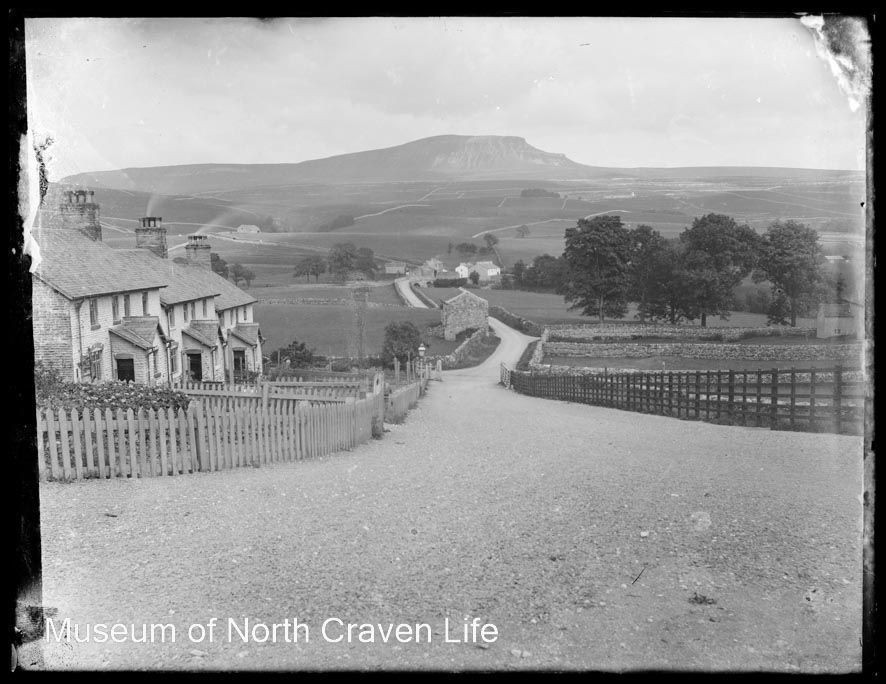
Horton-in-Ribblesdale from Station Road, Horner Photographic Studio, about 1875 to about 1925, Victorian. The Horner Photographic Collection, Museum of North Craven Life (The Folly), Settle. CC BY 4.0. See the work -
1805
“The beauties of Ribblesdale may be said to expire at Horton.”
Thomas Dunham Whitaker, historian of Craven. See the page
Source
The History and Antiquities of the Deanery of Craven (London: Nichols, 1805), page 135.
-
1805
“This parish is not surveyed in Domesday”
Thomas Dunham Whitaker, historian of Craven. See the page
Source
The History and Antiquities of the Deanery of Craven (London: Nichols, 1805), page 135.
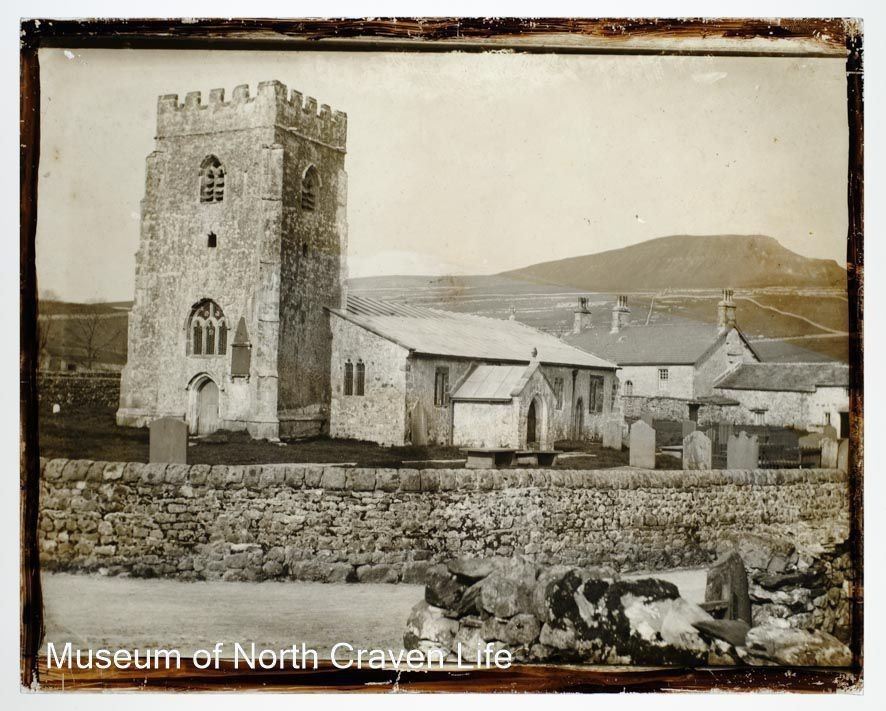
St Oswald's church, Horton-in-Ribblesdale, Horner Photographic Studio, about 1875 to about 1925, Victorian. The Horner Photographic Collection, Museum of North Craven Life (The Folly), Settle. CC BY 4.0. See the work -
1805
“Horton is so called (qu. Horetown?) as being often grey with sleet when the lower grounds are unsprinkled.”
Thomas Dunham Whitaker, historian of Craven. See the page
Source
The History and Antiquities of the Deanery of Craven (London: Nichols, 1805), page 135.
-
1822
“in the parish of Horton, and the wap. of Ewecross”
Edward Baines, Leeds printer and compiler of the county directory. See the page
Source and note
Edward Baines, History, Directory and Gazetteer of the County of York, vol. 1, West Riding (Leeds, 1822).
Baines puts the townships of Horton parish in the wapentake of Ewcross, which he spells Ewecross. Whitaker says Horton is outside Staincliffe.
-
1857
“A procession was formed from Horton to New Inn and back, with the Settle Temperance Band in advance, and the van led by two well known reformed characters.”
Settle Chronicle, the monthly Settle paper. See the page
Source and note
The Settle Chronicle and North Ribblesdale Advertiser, 1857 volume. Scans held by the Museum of North Craven Life, published by the North Craven Building Preservation Trust (CC BY-NC-SA 4.0), page 27.
A temperance festival on Horton Green.
-
1860
“killed in one day with minnow ... 18 lbs. of well fed trout”
Settle Chronicle, the monthly Settle paper. See the page
Source and note
The Settle Chronicle and North Ribblesdale Advertiser, 1860 volume. Scans held by the Museum of North Craven Life, published by the North Craven Building Preservation Trust (CC BY-NC-SA 4.0), page 33.
The fisherman was John Gill, a carpenter of Settle, fishing the Horton-in-Ribblesdale preserves.
-
1892
“The registers of the church record the unusual number of 74 burials for the single year 1597, while the average number of interments at this period is only about 15 annually.”
Harry Speight, Craven historian and walker. See the page
Source
The Craven and North-West Yorkshire Highlands (London: Elliot Stock, 1892), page 387.
-
1920 · 7 August 1920
“dreary six miles walk, with nothing but a sight of Moughton Fell to relieve the monotony”
Accrington Observer and Times, a newspaper, in the British Newspaper Archive's free search extract. See the page
Source and note
Accrington Observer and Times, 7 August 1920, page 9; the words come from the free extract the British Newspaper Archive's search shows, page 9.
The walk from Horton to Settle.