UK · England · North Yorkshire · Craven · In Chapel-le-Dale
Weathercote Cave

What the writers say
The writers describe the waterfall inside the cave, the rainbow in its spray and the rock wedged above it, which Speight says is called Mahomet's Coffin. Housman tells of a woman's bonnet lost in the cave that turned up in Hurtle Pot, and Speight says Turner painted it.
-
1779 · tour of about 1779, printed 1789
“near eleven yards from the top issues a torrent out of an hole in the rock, about the dimensions of a large door in a church”
Rev. J. Hutton, clergyman, touring the caves. See the page
Source
A Tour to the Caves in the West-Riding of Yorkshire, printed in Thomas West, A Guide to the Lakes, 4th edition (London and Kendal, 1789), page 259.
-
1779 · tour of about 1779, printed 1789
“the sun happening to shine very bright, we had a small vivid rainbow within a few yards of us”
Rev. J. Hutton, clergyman, touring the caves. See the page
Source
A Tour to the Caves in the West-Riding of Yorkshire, printed in Thomas West, A Guide to the Lakes, 4th edition (London and Kendal, 1789), page 259.
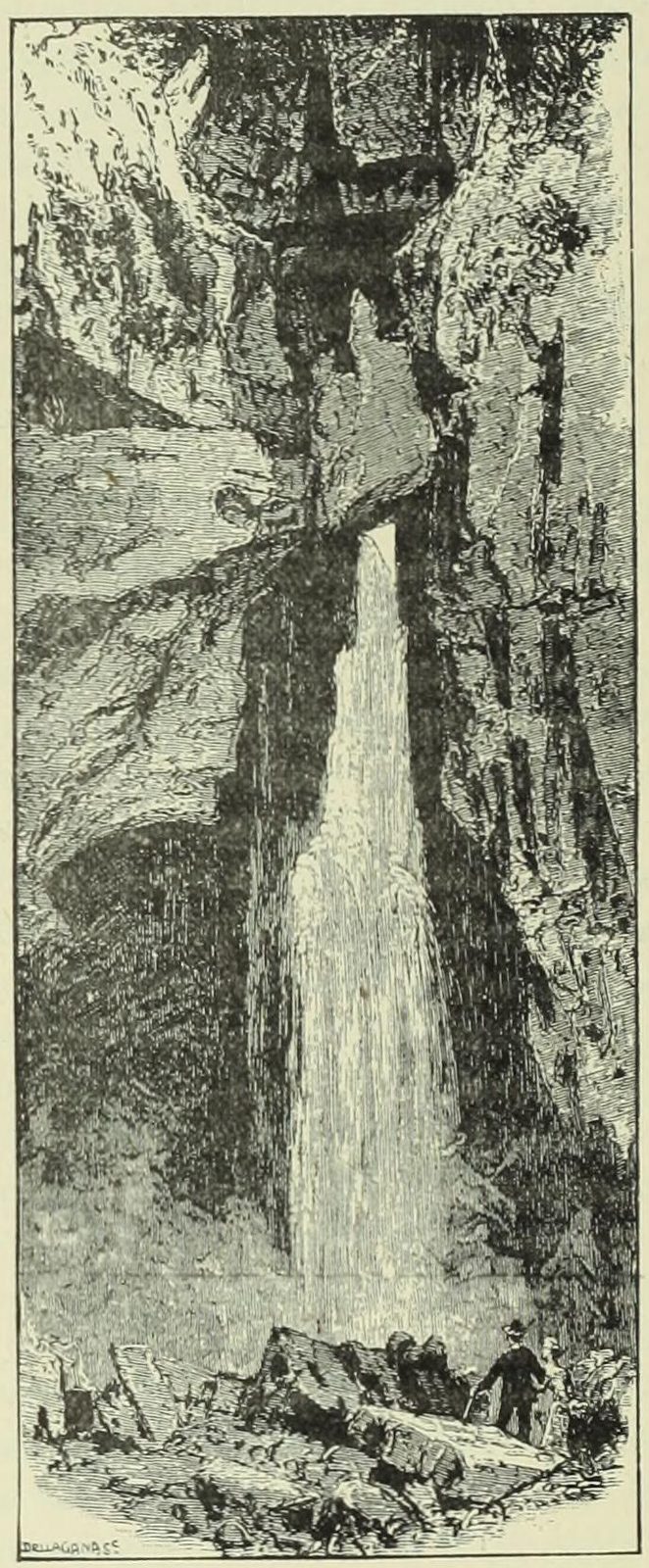
Weathercote Cave. From Harry Speight, The Craven and North-West Yorkshire Highlands (London: Elliot Stock, 1892). See the page -
1800 · 1800 (this copy printed 1808)
“This furious river, as if ashamed of exposing its streams to the open day, no sooner makes this frightful leap, than, in a moment, it disappears”
John Housman, guidebook writer. See the page
Source
A Descriptive Tour, and Guide to the Lakes, Caves, Mountains, and other Natural Curiosities (Carlisle: F. Jollie, 1808 edition), page 57.
-
1800 · 1800 (this copy printed 1808)
“A woman lost her bonnet in Weathercote cave, which disappeared among the rocks, and afterwards was found in Hurtlepot”
John Housman, guidebook writer. See the page
Source
A Descriptive Tour, and Guide to the Lakes, Caves, Mountains, and other Natural Curiosities (Carlisle: F. Jollie, 1808 edition), page 62.
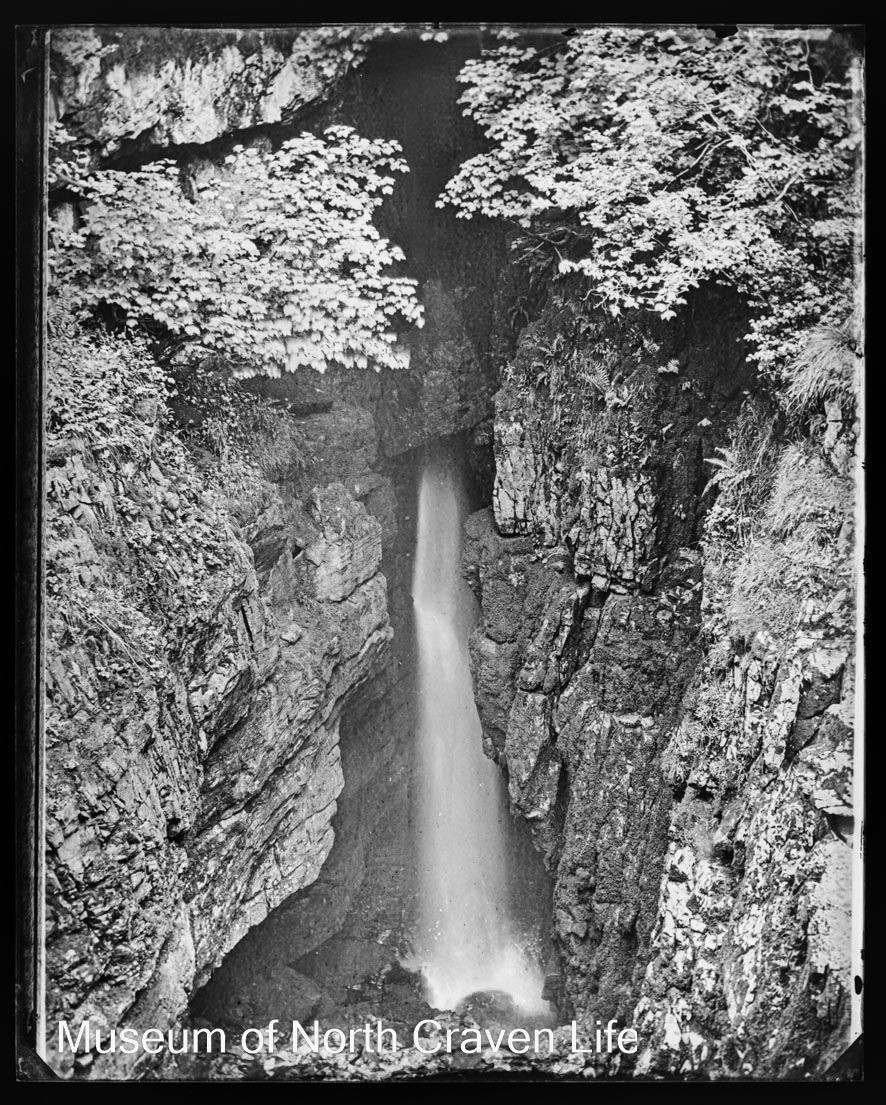
Weathercote Cave, Chapel-le-Dale, Horner Photographic Studio, about 1858 to about 1885. The Horner Photographic Collection, Museum of North Craven Life (The Folly), Settle. CC BY 4.0. See the work -
1853
“But Weathercote, by far the most magnificent cavern, has the uncommon ornament of a violent cascade”
John Phillips, geologist. See the page
Source
The Rivers, Mountains, and Sea-coast of Yorkshire (London: J. Murray, 1853), page 29.
-
1857
“we left it, fully convinced that our shillings had been well invested.”
Jerry Daffelem, in the Settle Chronicle, touring the caves round Ingleborough. See the page
Source
The Settle Chronicle and North Ribblesdale Advertiser, 1857 volume. Scans held by the Museum of North Craven Life, published by the North Craven Building Preservation Trust (CC BY-NC-SA 4.0), page 49.
-
1857
“an adjacent sign intimated that Weathercote Cave, like a raree show might be seen inside, on applying to the showman, Mr. Metcalfe, and paying that gentleman the trifling sum of one shilling”
Jerry Daffelem, in the Settle Chronicle, touring the caves round Ingleborough. See the page
Source
The Settle Chronicle and North Ribblesdale Advertiser, 1857 volume. Scans held by the Museum of North Craven Life, published by the North Craven Building Preservation Trust (CC BY-NC-SA 4.0), page 49.
-
1875 · 26 June 1875
“Weathercote Cave, Yorkshire, After J. M. W. Turner”
Workington Free Press and Solway Pilot, a newspaper, in the British Newspaper Archive's free search extract. See the page
Source and note
Workington Free Press and Solway Pilot, 26 June 1875, page 2; the words come from the free extract the British Newspaper Archive's search shows, page 2.
The Art Journal advertised its line engravings for June 1875, among them Turner's Weathercote Cave.
-
1892
“Below the point of effluence of the fall is a curiously-suspended rock, shaped somewhat like a sarcophagus, and on this account is called Mahomet’s Coffin.”
Harry Speight, Craven historian and walker. See the page
Source
The Craven and North-West Yorkshire Highlands (London: Elliot Stock, 1892), page 248.
-
1892
“The celebrated artists, J. M. W. Turner and W. Westall, have painted the scene under this striking aspect.”
Harry Speight, Craven historian and walker. See the page
Source
The Craven and North-West Yorkshire Highlands (London: Elliot Stock, 1892), page 249.


