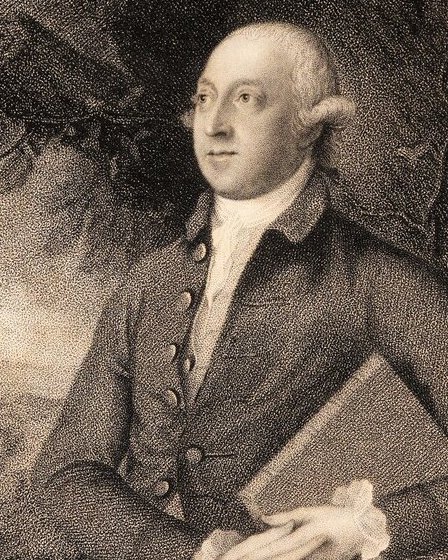
Who they were
Pennant was born at Downing, near Holywell in Flintshire, on 14 June 1726.
From Dictionary of National Biography, vol. 44, 'Pennant, Thomas', by Warwick William Wroth: “born at Downing in the parish of Whitford (or Whiteford), near Holywell, Flintshire, on 14 June 1726” See the page
At twelve a relative gave him Francis Willoughby's book on birds, and it started his love of natural history.
From Dictionary of National Biography, vol. 44, 'Pennant, Thomas', by Warwick William Wroth: “At the age of twelve he was given by his relative, Richard Salisbury (father of Mrs. Thrale), a copy of Francis Willoughby's ‘Ornithology,’ and to this present he attributed his early taste for natural history.” See the page
From 1755 he wrote letters to Linnaeus.
From Dictionary of National Biography, vol. 44, 'Pennant, Thomas', by Warwick William Wroth: “In 1755 he began a correspondence with Linnæus” See the page
At Ferney he met Voltaire, and found him very entertaining and a master of English oaths.
From Dictionary of National Biography, vol. 44, 'Pennant, Thomas', by Warwick William Wroth: “At Ferney he saw Voltaire, whom he found ‘very entertaining’ and a master of English oaths.” See the page
He made every tour on horseback, and kept a full journal.
From Dictionary of National Biography, vol. 44, 'Pennant, Thomas', by Warwick William Wroth: “as on all subsequent tours, he journeyed on horseback, and kept an elaborate journal” See the page
The Welsh artist Moses Griffith went with him and drew what they saw.
From Dictionary of National Biography, vol. 44, 'Pennant, Thomas', by Warwick William Wroth: “Moses Griffith [q. v.], the Welsh artist, attended him on this journey (as also on his later tours), making sketches and drawings” See the page
Samuel Johnson called him the best traveller he ever read.
From Dictionary of National Biography, vol. 44, 'Pennant, Thomas', by Warwick William Wroth: “he's the best traveller I ever read; he observes more things than any one else does” See the page
Horace Walpole sneered that he picked up his knowledge as he rode.
From Dictionary of National Biography, vol. 44, 'Pennant, Thomas', by Warwick William Wroth: “who ‘picks up his knowledge as he rides.’” See the page
He died at Downing on 16 December 1798.
From Dictionary of National Biography, vol. 44, 'Pennant, Thomas', by Warwick William Wroth: “He died at Downing on 16 Dec. 1798” See the page
In Craven
He rode through Craven in 1773, on a tour from his home to Alston Moor.
From Thomas Pennant, A Tour from Downing to Alston-Moor (London: Edward Harding, 1801): “The Tour from Downing to Alston Moor, now presented to the Public, was performed by Mr. Pennant in 1773.” See the page
In Yorkshire he went to Sawley Abbey, Malham Cove, Settle, Giggleswick and Ingleton.
From Thomas Pennant, A Tour from Downing to Alston-Moor (London: Edward Harding, 1801): “In that of York I visited Salley-abbey ... Malham Coves, Settle, Giggleswick and Ingleton.” See the page
He spent a night at Gisburn, and called it a miserable dirty little town.
From Thomas Pennant, A Tour from Downing to Alston-Moor (London: Edward Harding, 1801), page 107: “the miserable dirty little town of Gisburn, where I lay this night.” See the page
At Settle he dined at the neatest little inn he had ever known.
From Thomas Pennant, A Tour from Downing to Alston-Moor (London: Edward Harding, 1801), page 111: “I dined here at the neatest and most comfortable little inn I ever was at” See the page
The journey
A tour from Downing to Alston Moor, August 1773. 3 to 24 August 1773.
Craven is stops 25 to 38 of 54, between Paythorne and Kirkby Lonsdale. Light dots are stops inside Craven. Each stop is a place the writer names, and their words are listed under the maps. Straight lines join the stops. We do not know every road they took.
“Desire of health from exercise, and thirst after information respecting the almost latent curiosities of our island” See the page
The stretch in Craven
How we know each stop: all 54, in the writer's own words
1. Downing · 3 August 1773
“I left my own house the 3d of August, passed through Chester”, page 1. See the page
Downing was Pennant's own house; the book's title names it. OpenStreetMap has no Downing, so the dot is at Upper Downing Road in Whitford, Flintshire.
2. Chester · 3 August 1773
“I left my own house the 3d of August, passed through Chester”, page 1. See the page
3. Halton Castle
“From hence I made another visit to Halton Castle, to hang over, once more, the much admired prospect”, page 2. See the page
4. Runcorn
“I descended about a mile to Runcorn, to see the grand termination of the Duke of Bridgewaters Canal”, page 2. See the page
5. Warrington
“I then quitted Cheshire, after crossing the bridge at Warrington”, page 5. See the page
6. Orford
“During my stay at Orford, I made an excursion across Warrington-bridge into Cheshire”, page 12. See the page
7. Sefton
“By noon I reached the village of Sefton”, page 47. See the page
8. Burscough Priory
“At about two miles distant from Ormskirk I turned into a field to visit the site of the Priory of Burscough”, page 53. See the page
9. Lathom
“From Latham I descended and passed over Hosier-moss”, page 61. See the page
Pennant spells it Latham.
10. Houghton Tower
“Houghton Tower, a great pile consisting of two courts ... In a short time after leaving Houghton”, page 64. See the page
11. Whalley Abbey
“entered on the precincts of the Abbey of Whalley, seated on the river's side”, page 68. See the page
12. Standen Hall
“From Clithero I paid my respects to John Aspinal, esq. of Standen-hall, about a mile south of the town, to whose hospitality and attention I think myself highly indebted”, page 81. See the page
13. Great Mitton
“From Mitton I rode a little north, and crossed into Lancashire over the rapid river Hodder”, page 85. See the page
14. Stonyhurst
“lies about one mile from Hodder-bridge in an advantageous situation. It is a lofty and large building of different periods”, page 85. See the page
The sentence begins 'The house of the Sherborns'. The book's own list of places calls this stop Stoneyhurst.
15. Bashall Hall
“I repassed the Hodder into Yorkshire, and rode towards”, page 86. See the page
The sentence ends with the name Bashal-hall, which the scan misreads.
16. Waddington
“The road from hence is singular, along the top of a great ridge, with sloping fields on each hand ... lies Waddington, a small village with a church and hall of the same name”, page 86. See the page
17. Waddow Hall
“A mile further is Waddow-hall ... We crossed the Ribble by the Hippen-stones”, page 90. See the page
18. Clitheroe
“passed through Clithero, and returned to Standen”, page 90. See the page
19. Ribchester
“Mr. Aspinal, in compliance with my desire of seeing the Roman station at Ribchester, did me the favour of attending me there”, page 90. See the page
20. Sawley Abbey
“again entered the west riding of Yorkshire ... At a small distance from hence, near the road, stand the precincts of the Abbey of Salley”, page 100. See the page
Pennant spells it Salley.
21. Bolton Hall
“and, after a short ride, visited Bolton-hall”, page 103. See the page
22. Gisburne Park
“crossed the Ribble close to Gisburn Park, the seat of Thomas Lister”, page 106. See the page
23. Gisburn
“the miserable dirty little town of Gisburn, where I lay this night”, page 107. See the page
24. Paythorne
“I pursued my tour along the road to Settle, through Paythorne”, page 107. See the page
The sentence goes on to name Newsholme and Nappa, but the scan misreads both.
25. Swinden · Craven
“as far as Swinden”, page 107. See the page
26. Hellifield · Craven
“A little beyond Swinden I quitted the road for a more private way through Helifield”, page 107. See the page
Pennant spells it Helifield.
27. Otterburn · Craven
“another village, between which and the next, Otterburn, is a large round tumulus”, page 107. See the page
28. Kirkby Malham · Craven
“Passed through the small ... town of Kirkby in Malham-dale, where there is a large and neat church”, page 108. See the page
29. Malham · Craven
“I breakfasted at the hamlet of Malham”, page 108. See the page
30. Gordale Scar · Craven
“took a walk by the side of the Air here, a rapid torrent, through a stony valley, to visit the celebrated Gordale Coves”, page 108. See the page
Pennant calls the place Gordale Coves. Later the same day he looked down on Gordale-scar from the hill road.
31. Malham Tarn · Craven
“I saw Malham-turn in a bottom amidst the hills, a small lake about two miles round”, page 110. See the page
The scan reads Malham-turn for Malham-tarn.
32. Castleberg · Craven
“I descended an exceedingly tedious and steep road ... At the foot of a monstrous lime-stone rock, called Castleberg, that threatens destruction, lies Settle”, page 111. See the page
33. Settle · Craven
“lies Settle, a small town in a little vale ... I dined here at the neatest and most comfortable little inn I ever was at”, page 111. See the page
34. Giggleswick · Craven
“its parish is that of Giggleswick, higher up the vale, which I passed after crossing the Ribble”, page 112. See the page
35. Ebbing and Flowing Well · Craven
“The famous flowing spring lies on the road side beneath ... I watched it for some time, but it happened to be quiescent”, page 113. See the page
Pennant says the well lies beneath Giggleswick Scar. OpenStreetMap does not mark the well, so the dot is on the scar.
36. Clapham · Craven
“I passed through the village of Clapham.”, page 113. See the page
37. Ingleton · Craven
“I descended to Ingleton, a small town and chapelry ... I slept at Ingleton.”, page 114. See the page
38. Thornton in Lonsdale · Craven
“Next day I went down by Thornton-church, crossed two bridges over two torrents”, page 117. See the page
39. Kirkby Lonsdale
“Here I crossed the river over a lofty bridge of three beautiful elliptical arches ... At a small distance from the bridge is Kirkby-Lonsdale, a small town”, page 117. See the page
40. Kendal
“From hence I crossed the country twelve miles, (an uninteresting ride,) to Kendal.”, page 119. See the page
41. Shap
“I rode very near to Shap”, page 121. See the page
42. Kirkby Stephen
“I reached Kirkby Stephen, a small town in a most fertile”, page 121. See the page
43. Brough
“I then left Kirkby-Stephen, and continued my journey three ... or four miles northward to Brough”, page 135. See the page
44. Appleby
“I entered the small town of Appleby”, page 139. See the page
45. Penrith
“I then left Penrith, and rode eastward”, page 160. See the page
46. Long Meg and Her Daughters
“After riding about three miles northward, I saw, in the parish of ... the noted Druidical Temple called Long Meg and her daughters”, page 164. See the page
47. Brampton
“After riding a mile and a half further, I reached ... The town is small, and contains nothing remarkable.”, page 171. See the page
48. Lanercost Priory
“At a little distance from Llanercost I passed over the site of the Picts Wall”, page 179. See the page
49. Bewcastle
“From Beucastle I rode about twenty miles along a very bad and uncultivated country”, page 182. See the page
Pennant spells it Beucastle.
50. Netherby Hall
“crossed the Line, and reached ... where I again experienced the hospitality of its owner, the Reverend Mr. Graham”, page 182. See the page
The place he reached is Netherby; the scan misreads the name.
51. Burgh by Sands
“From thence I visited Burgh-marsh, in a parish of the”, page 183. See the page
Burgh Marsh, where Edward I died in 1307, lies beside the village of Burgh by Sands.
52. Carlisle · 23 August 1773
“I took the road to Carlisle, on the 23d of August.”, page 186. See the page
53. Castle Carrock · 24 August 1773
“Aug. 24. I soon fell into my former track at Castle-carrock”, page 186. See the page
54. Alston
“I reached Alston Moor, a mine, and market-town”, page 187. See the page
Pennant ends the tour here: in his own words, he 'finished this MS. Volume at Alston'.
From Thomas Pennant, A Tour from Downing to Alston-Moor (London: Edward Harding, 1801); the tour was made in 1773.
14 quotes on 11 places
A bigger dot means more quotes. Tap a dot to open the place.
What they wrote
-
Settle, and 2 more
1773 · 1773 (printed 1801)
“Numbers of coiners and filers lived about the place, at this time entirely out of work, by reason of the recent salutary law respecting the weight of gold.”
Thomas Pennant, naturalist and travel writer. See the page
Source and note
Thomas Pennant, A Tour from Downing to Alston-Moor (London, 1801), page 111.
Speight (1892, p. 84) dates Pennant's visit to 1773.
-
Ingleton, and 1 more
1773
“seated at the foot of the great mountain of Ingleborough, which looks like Ossa upon Pelion”
Thomas Pennant, Welsh naturalist and travel writer, touring in 1773. See the page
Source and note
Thomas Pennant, A Tour from Downing to Alston-Moor (London: Edward Harding, 1801); the tour was made in 1773, page 114.
In the Greek myth, giants piled Mount Ossa on Mount Pelion to reach the gods.
-
1773
“At the foot of a monstrous lime-stone rock, called Castleberg, that threatens destruction”
Thomas Pennant, Welsh naturalist and travel writer, touring in 1773. See the page
Source
Thomas Pennant, A Tour from Downing to Alston-Moor (London: Edward Harding, 1801); the tour was made in 1773, page 110.
-
1773 · 1773 (printed 1801)
“It is a well of small size, which ebbs and flows once in a quarter of an hour, and sometimes with that force as to rise a foot high. I watched it for some time, but it happened to be quiescent ; my patience was exhausted, and I pursued my journey.”
Thomas Pennant, naturalist and travel writer. See the page
Source
Thomas Pennant, A Tour from Downing to Alston-Moor (London, 1801), page 113.
-
1773
“At Helifield is an ancient house called Helifield Peel, in form of a tower, with walls four or five yards thick.”
Thomas Pennant, Welsh naturalist and travel writer, touring in 1773. See the page
Source
Thomas Pennant, A Tour from Downing to Alston-Moor (London: Edward Harding, 1801); the tour was made in 1773, page 107.
-
1773 · journey of 1773, printed 1801
“This is reckoned the highest ground in England in respect to the sea, and I believe with truth.”
Thomas Pennant, naturalist and travel writer. See the page
Source
A Tour from Downing to Alston-Moor (London: E. Harding, 1801), page 114.
-
1773
“The farmers live in society in the villages, and have their barns and cattle-houses in the midst of their grounds, without any adjacent dwellings”
Thomas Pennant, Welsh naturalist and travel writer, touring in 1773. See the page
Source
Thomas Pennant, A Tour from Downing to Alston-Moor (London: Edward Harding, 1801); the tour was made in 1773, page 108.
-
1773
“I saw Malham-turn in a bottom amidst the hills, a small lake about two miles round, famous for trout and perch. The waters which flow from this lake immediately sink under ground”
Thomas Pennant, Welsh naturalist and travel writer, touring in 1773. See the page
Source and note
Thomas Pennant, A Tour from Downing to Alston-Moor (London: Edward Harding, 1801); the tour was made in 1773, page 110.
Pennant's 'Malham-turn' is Malham Tarn.
-
1773
“between which and the next, Otterburn, is a large round tumulus”
Thomas Pennant, Welsh naturalist and travel writer, touring in 1773. See the page
Source and note
Thomas Pennant, A Tour from Downing to Alston-Moor (London: Edward Harding, 1801); the tour was made in 1773, page 107.
A tumulus is a burial mound. Pennant means between Hellifield and Otterburn.
-
1773
“The great hill of Penygent is seen from hence, and is about six miles distant.”
Thomas Pennant, Welsh naturalist and travel writer, touring in 1773. See the page
Source and note
Thomas Pennant, A Tour from Downing to Alston-Moor (London: Edward Harding, 1801); the tour was made in 1773, page 112.
Pennant is writing at Settle.
-
1773
“as far as Swinden, the last called a manor and township in Paghanele, in Doomsday-book”
Thomas Pennant, Welsh naturalist and travel writer, touring in 1773. See the page
Source
Thomas Pennant, A Tour from Downing to Alston-Moor (London: Edward Harding, 1801); the tour was made in 1773, page 107.