Lady Anne Clifford
Countess, heir of the Cliffords, who rebuilt their castles in Craven and Westmorland
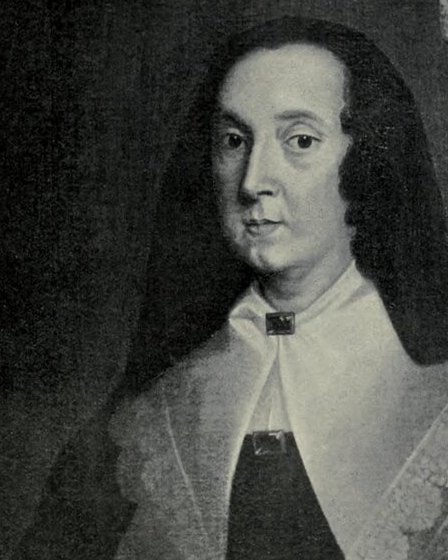
In their own words
“which disease did so martyr my face, that it confirmed more and more my mind never to marry again”
Dictionary of National Biography, vol. 11, 'Clifford, Anne', by George Fisher Russell Barker. See the page
Who they were
Anne Clifford was the only surviving child of the third Earl of Cumberland.
From Dictionary of National Biography, vol. 11, 'Clifford, Anne', by George Fisher Russell Barker: “was the only surviving child of George, third earl of Cumberland” See the page
The poet Samuel Daniel was her tutor.
From Dictionary of National Biography, vol. 11, 'Clifford, Anne', by George Fisher Russell Barker: “The poet Daniel was her tutor” See the page
In 1643 the family's northern estates came to her under her father's will.
From Dictionary of National Biography, vol. 11, 'Clifford, Anne', by George Fisher Russell Barker: “on 11 Dec. 1643, without male issue, the large family estates in the north reverted to her under the provisions of her father's will” See the page
She restored or rebuilt six castles, among them Skipton and Barden Tower.
From Dictionary of National Biography, vol. 11, 'Clifford, Anne', by George Fisher Russell Barker: “She restored or rebuilt the castles of Skipton, Appleby, Brougham, Brough, Pendragon, and Bardon Tower” See the page
She lived at each of her castles in turn.
From Dictionary of National Biography, vol. 11, 'Clifford, Anne', by George Fisher Russell Barker: “It was her custom to reside at fixed times at each one of her six castles” See the page
After her second husband died she dressed in black serge.
From Dictionary of National Biography, vol. 11, 'Clifford, Anne', by George Fisher Russell Barker: “dressing, after her second widowhood, in black serge” See the page
John Donne, the story goes, praised how widely she could talk.
From Dictionary of National Biography, vol. 11, 'Clifford, Anne', by George Fisher Russell Barker: “Dr. Donne is reported to have said of her that 'she knew well how to discourse of all things, from predestination to slea-silk'” See the page
She died at Brougham Castle on 22 March 1676, in her eighty-seventh year.
From Dictionary of National Biography, vol. 11, 'Clifford, Anne', by George Fisher Russell Barker: “She died at Brougham Castle on 22 March 1676, in the eighty-seventh year of her age” See the page
In Craven
She was born at Skipton Castle on 30 January 1590.
From Dictionary of National Biography, vol. 11, 'Clifford, Anne', by George Fisher Russell Barker: “She was born at Skipton Castle on 30 Jan. 1590.” See the page
She left Skipton as a baby, and did not come back into the castle until July 1649.
From George C. Williamson, Lady Anne Clifford (Kendal, 1922): “She never came into Skipton Castle after that time, she says, until the 18th of July, 1649” See the page
Her building stones end with the words God's name be praised.
From George C. Williamson, Lady Anne Clifford (Kendal, 1922): “The final words on each of the inscribed stones are, " God's name be praised."” See the page
In October 1663 she crossed Buckden Rakes for the first time.
From Harry Speight, The Craven and North-West Yorkshire Highlands (London, 1892), page 340: “And this was the first time I was ever in Kettlewelldale, or went over Buckden Rakes” See the page
The journey
From Skipton Castle to Pendragon Castle, October 1663. 6 to 8 October 1663.
Craven is stops 1 to 4 of 8, before Stake Moss. Light dots are stops inside Craven. Each stop is a place the writer names, and their words are listed under the maps. Straight lines join the stops. We do not know every road they took.
The stretch in Craven
How we know each stop: all 8, in the writer's own words
1. Skipton Castle · Craven · 6 October 1663
“After I had lain in Skipton Castle in ye chamber there wherein I was born ... did I remove from thence onwards on my journey toward Westmoreland”, page 15. See the page
She had lived at Skipton for five months, since leaving Barden Tower.
2. Kilnsey · Craven · 6 October 1663
“I went to Mr. Cuthbert Wade's house at Kilnsey, and lay there ye night”, page 15. See the page
Shuffrey says the Wades lived at Kilnsey Hall. The map marks Kilnsey Old Hall.
3. Kettlewell · Craven · 7 October 1663
“so ye next day from them through Kettlewell Dale”, page 15. See the page
She writes Kettlewell Dale, the upper part of Wharfedale. The map marks Kettlewell village.
4. Buckden Rake · Craven · 7 October 1663
“up Buckden Rakes”, page 15. See the page
She writes Buckden Rakes. The track climbs out of Wharfedale above Buckden.
5. Stake Moss · 7 October 1663
“over ye stake into Wensleydale”, page 15. See the page
She writes the Stake. The road crosses Stake Moss between Wharfedale and Wensleydale.
6. Nappa Hall · 7 October 1663
“to my cosen Mr. Thos. Metcalf s house at Nappa, where I lay also ye night”, page 15. See the page
7. Cotter End · 8 October 1663
“the next day I went over Cotter, which I lately repaired”, page 340. See the page
She writes Cotter. Her road ran over Cotter End, above Cotterdale. This line comes from Speight's copy of the same diary entry.
8. Pendragon Castle · 8 October 1663
“I came into this Pendragon's Castle”, page 340. See the page
Her castle in Mallerstang, Westmorland. Shuffrey's copy of the entry ends: and on to Pendragon.
From Lady Anne Clifford's diary for 1663, as printed in William Arthur Shuffrey, Some Craven Worthies (London: F. E. Robinson; Leeds: Richard Jackson, 1903), and in Harry Speight, The Craven and North-West Yorkshire Highlands (London: Elliot Stock, 1892).
6 quotes on 4 places
A bigger dot means more quotes. Tap a dot to open the place.
What they wrote
-
Barden Tower, and 1 more
1649 · July 1649
“into that old decayed Tower at Barden (it being the first time that ever I was in that Tower).”
Lady Anne Clifford, heiress of the Clifford lands, in her own record of her life. See the page
Source and note
George C. Williamson, Lady Anne Clifford, Countess of Dorset, Pembroke and Montgomery, 1590-1676 (Kendal, 1922), page 193.
She went to Barden ten days after she first reached Skipton that summer. Williamson names Barden Tower among the buildings she set herself to restore.
-
Skipton, and 1 more
1657
“which Roomes were all Covered over with slate about Michellmas also, with Gutters of Leade about the Roomes thatt are Covered with slate, ffor I was not permitted to cover it with Leade”
Lady Anne Clifford, heiress of Skipton Castle, in her own record of her life. See the page
Source and note
George C. Williamson, Lady Anne Clifford, Countess of Dorset, Pembroke and Montgomery, 1590-1676 (Kendal, 1922), page 420.
Williamson's footnote says the ban on a lead roof was to stop anyone mounting cannon on it.
-
1666
“the first time that any of my said three grandchildren ... were ever in Barden Tower, Beamsley Hall, or the Almshouses.”
Lady Anne Clifford, Countess of Pembroke, in her own record of her life. See the page
Source and note
George C. Williamson, Lady Anne Clifford, Countess of Dorset, Pembroke and Montgomery, 1590-1676 (Kendal, 1922), page 236.
She sent three granddaughters and their three women out from Skipton to dine at Barden and see the Beamsley almshouses. Her mother had founded the almshouses.
-
1663 · October 1663
“And this was the first time I was ever in Kettlewelldale, or went over Buckden Rakes or Stake by Wensledale or Cotter, or any of those dangerous places wherein yet God was pleased to preserve me in that journey.”
Lady Anne Clifford, Countess of Pembroke, in her diary, aged 73. See the page
Source
Harry Speight, The Craven and North-West Yorkshire Highlands (London: Elliot Stock, 1892), page 340.