John Leland
Henry VIII's antiquary, who toured England noting its towns, rivers and libraries
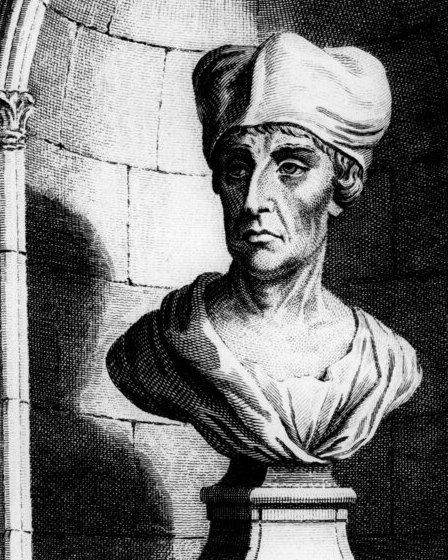
Who they were
Leland was born in London about 1506.
From Dictionary of National Biography, vol. 33, 'Leland, John (1506?-1552)', by Sidney Lee: “antiquary, born in London about 1506” See the page
He went to St Paul's School in London.
From Dictionary of National Biography, vol. 33, 'Leland, John (1506?-1552)', by Sidney Lee: “John was sent to St. Paul's School, London, under William Lily” See the page
He finished his studies in Paris.
From Dictionary of National Biography, vol. 33, 'Leland, John (1506?-1552)', by Sidney Lee: “He ultimately completed his studies in Paris under Francis Sylvius” See the page
He came home reading Latin and Greek, with French, Italian and Spanish too.
From Dictionary of National Biography, vol. 33, 'Leland, John (1506?-1552)', by Sidney Lee: “He returned home a finished scholar in both Latin and Greek, and with a good knowledge of French, Italian, and Spanish.” See the page
Before 1530 Henry VIII made him keeper of the royal library.
From Dictionary of National Biography, vol. 33, 'Leland, John (1506?-1552)', by Sidney Lee: “Before 1530 Henry VIII made him his library keeper” See the page
In 1533 the king made him the king's antiquary, a post nobody held before or after him.
From Dictionary of National Biography, vol. 33, 'Leland, John (1506?-1552)', by Sidney Lee: “In 1533 Leland was made ‘king's antiquary,’ an office in which he had neither predecessor nor successor” See the page
On his travels he wrote down how many miles lay between places, and the best road into each town.
From Dictionary of National Biography, vol. 33, 'Leland, John (1506?-1552)', by Sidney Lee: “His ‘Itinerary’ carefully notes the miles distant between the places that he visited, the best way of approaching each city” See the page
He went out of his mind, and in 1550 the privy council put him in his brother's care.
From Dictionary of National Biography, vol. 33, 'Leland, John (1506?-1552)', by Sidney Lee: “he became incurably insane. On 21 March 1550 the privy council gave him into the custody of his brother” See the page
He died on 18 April 1552 without getting better.
From Dictionary of National Biography, vol. 33, 'Leland, John (1506?-1552)', by Sidney Lee: “Leland died without recovering his reason on 18 April 1552” See the page
In Craven
Leland's notes place Craven beside Richmondshire, to its south-west.
From The Itinerary of John Leland, ed. Lucy Toulmin Smith, vol. IV (London, 1909), page 31: “Richemontshire liith harde apon the borders of Cravenland.” See the page
On his great tour, about 1537, he stayed with Sir William Leyland at Morley, near Leigh in Lancashire.
From Dictionary of National Biography, vol. 33, 'Leland, John (1506?-1552)', by Sidney Lee: “When on his great tour about 1537 the antiquary visited Sir William Leyland, possibly a kinsman, at his house at Morley near Leigh in Lancashire” See the page
5 quotes on 2 places
A bigger dot means more quotes. Tap a dot to open the place.
What they wrote
-
Where Craven ends, and 2 more
1540 · about 1535 to 1543
“Bysshops-Dale lyethe joyninge to the quarters of Craven.”
John Leland, the king's antiquary, travelling England. See the page
Source
The Itinerary of John Leland in or about the years 1535-1543, ed. Lucy Toulmin Smith, vol. 5 (London, 1910), part X, page 138.
-
1540 · about 1535 to 1543
“The forest from a mile beneth Gnarresburgh upward to very Bolton yn Craven is about a 20. miles yn lenght”
John Leland, the king's antiquary, travelling England. See the page
Source and note
The Itinerary of John Leland in or about the years 1535-1543, ed. Lucy Toulmin Smith, vol. 1 (London, 1907), part I, page 87.
Leland means the Forest of Knaresborough. Gnarresburgh is Knaresborough.
-
1540 · about 1540
“which at Flasby receiveth a ryll from Helton, as I here, and goeth forthe to Eshton, Elsewoode ... and so forthe on.”
John Leland, Henry VIII's antiquary, describing the Aire. See the page
Source and note
Thomas Dunham Whitaker, The History and Antiquities of the Deanery of Craven (London, 1805).
Leland is tracing the Aire from its source past Gargrave. 'Helton' is Hetton.