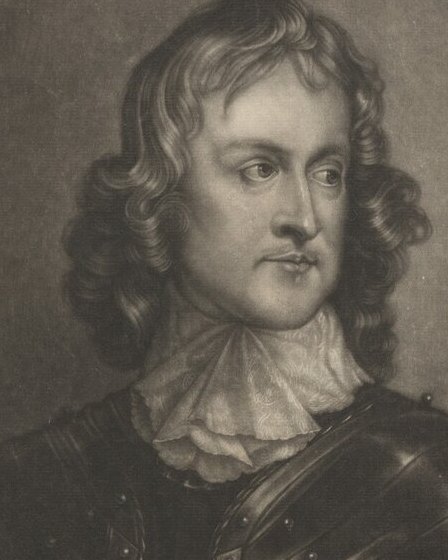
Who they were
When the civil war began he took up arms for parliament under Lord Fairfax.
From Dictionary of National Biography, vol. 32, 'Lambert, John (1619-1683)', by Charles Harding Firth: “When the civil war began, Lambert took up arms for the parliament in the army under the command of Lord Fairfax.” See the page
He painted flowers, and bought pictures that had belonged to Charles I.
From Dictionary of National Biography, vol. 32, 'Lambert, John (1619-1683)', by Charles Harding Firth: “bought 'divers rare pictures' which had belonged to Charles I, and is said himself to have painted flowers” See the page
His own side called him honest John Lambert.
From Dictionary of National Biography, vol. 32, 'Lambert, John (1619-1683)', by Charles Harding Firth: “Among his own party Lambert was known as ‘honest John Lambert.'” See the page
Cromwell called Mrs Lambert his jewel.
From Dictionary of National Biography, vol. 32, 'Lambert, John (1619-1683)', by Charles Harding Firth: “inquired of dear Johnny for his jewel (so he calls Mrs. Lambert)” See the page
From 1667 he was a prisoner on the island of St Nicholas, in Plymouth Sound.
From Dictionary of National Biography, vol. 32, 'Lambert, John (1619-1683)', by Charles Harding Firth: “in 1667 he was removed to the island of St. Nicholas in Plymouth Sound” See the page
He died a prisoner in the winter of 1683.
From Dictionary of National Biography, vol. 32, 'Lambert, John (1619-1683)', by Charles Harding Firth: “He died a prisoner in the winter of 1683” See the page
In Craven
His baptism took place at Calton, near Malham Tarn, on 7 November 1619.
From Dictionary of National Biography, vol. 32, 'Lambert, John (1619-1683)', by Charles Harding Firth: “was baptised on 7 Nov. 1619 at Calton, near Malham Tarn, in Yorkshire” See the page
In 1639 he married Frances, daughter of Sir William Lister of Thornton in Craven.
From Dictionary of National Biography, vol. 32, 'Lambert, John (1619-1683)', by Charles Harding Firth: “On 10 Sept. 1639 he married Frances, daughter of Sir William Lister, knight, of Thornton in Craven” See the page
In 1651 he wrote from Settle, where five regiments of horse had stopped for the night.
From Harry Speight, The Craven and North-West Yorkshire Highlands (London, 1892), page 89: “We are this night with five of our best regiments of horse quartered at Settle” See the page
His eldest son, John Lambert of Calton, was a careful painter.
From Dictionary of National Biography, vol. 32, 'Lambert, John (1619-1683)', by Charles Harding Firth: “John Lambert of Calton described by his friend Thoresby as a great scholar and virtuoso, and 'a most exact limner'” See the page
1 quote on 1 place
A bigger dot means more quotes. Tap a dot to open the place.
What they wrote
-
1651 · 11 August 1651
“We are this night with five of our best regiments of horse quartered at Settle-in-Craven, one hundred and forty miles from St. Johnston, where we were on Sunday seven-night.”
General John Lambert, Parliament's general, writing to the Council of State. See the page
Source
Harry Speight, The Craven and North-West Yorkshire Highlands (London: Elliot Stock, 1892), page 89.