Gray's Gordale
Moderate 6.5 miles · 299 m climb · about 2 h 35 min · a loop
Start: Malham village, by the National Park Centre. The route follows part of the Pennine Way. With Thomas Gray, John Hutton, Walter White.
Before you go
- The way up through Gordale Scar is a short scramble beside the waterfall. Take care when the beck is in spate.
- Malham Tarn's stamp works on the path along its south shore.
A fairy queen's waterfall, a goat that frightened a poet, and a cliff that floodwater once poured over.
With children? Give them the phone. At each stop, one reads the story aloud and the other collects the stamp. Each stamp stays hidden until you collect it.
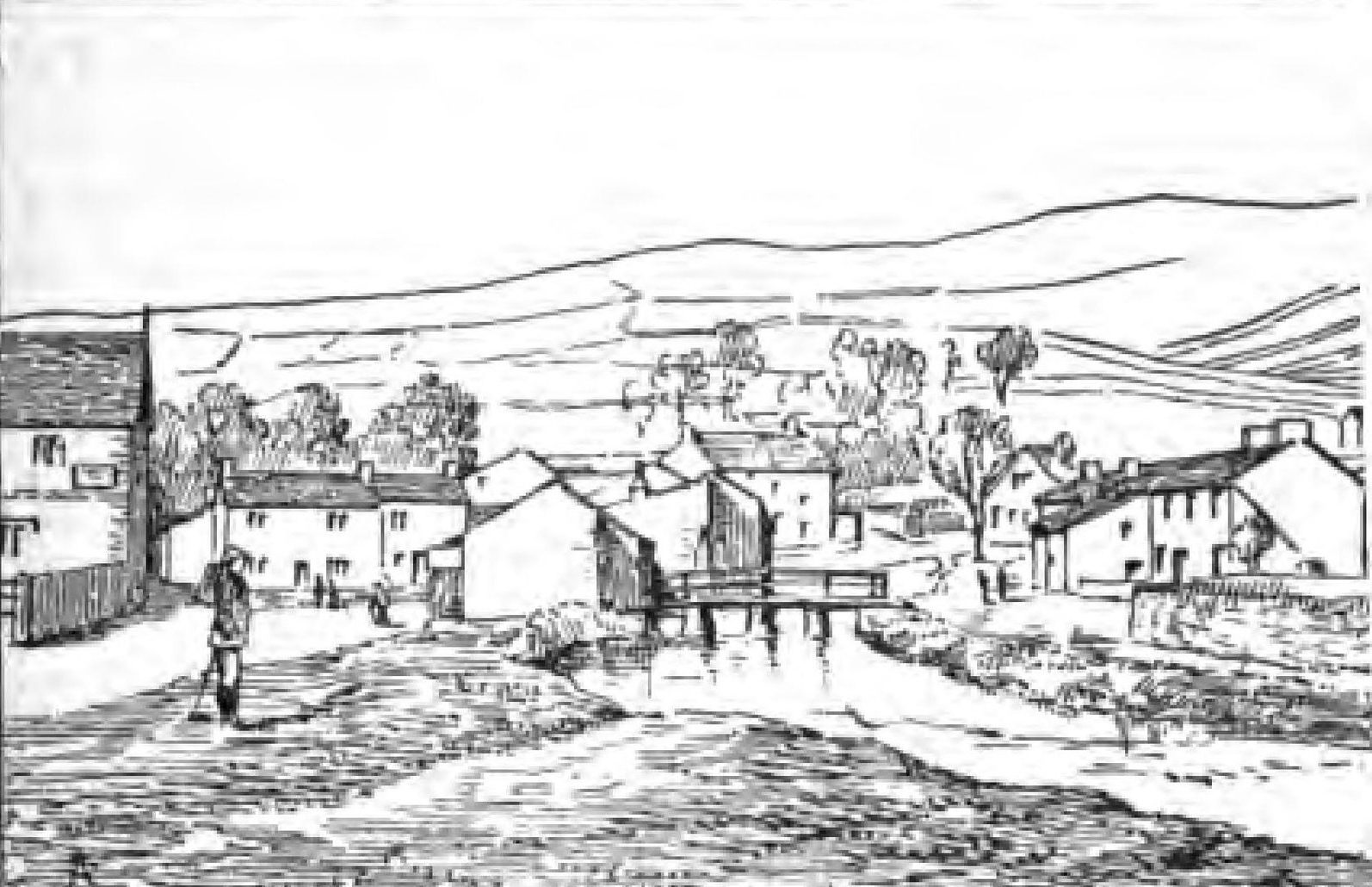
Malham. From Harry Speight, writing as Johnnie Gray, Through Airedale from Goole to Malham (Leeds: Walker & Laycock, 1891). See the page 1 · Malham
Read this aloud, or listen
Long ago, a huge sheep fair was held at Malham. Sheep came from as far away as Scotland. The Settle Chronicle said that 50,000 to 80,000 sheep once came. In the evening, young people from all the dales danced here to a village musician.
This story comes from the Settle Chronicle, in 1857, the Inverness Courier, in 1847, and John Housman, writing in 1800.
When you get there Count the sheep you can see. Could this valley hold 50,000?
“a village in the bosom of the mountains, seated in a wild and dreary valley”
Thomas Gray, 13 October 1769. See the page
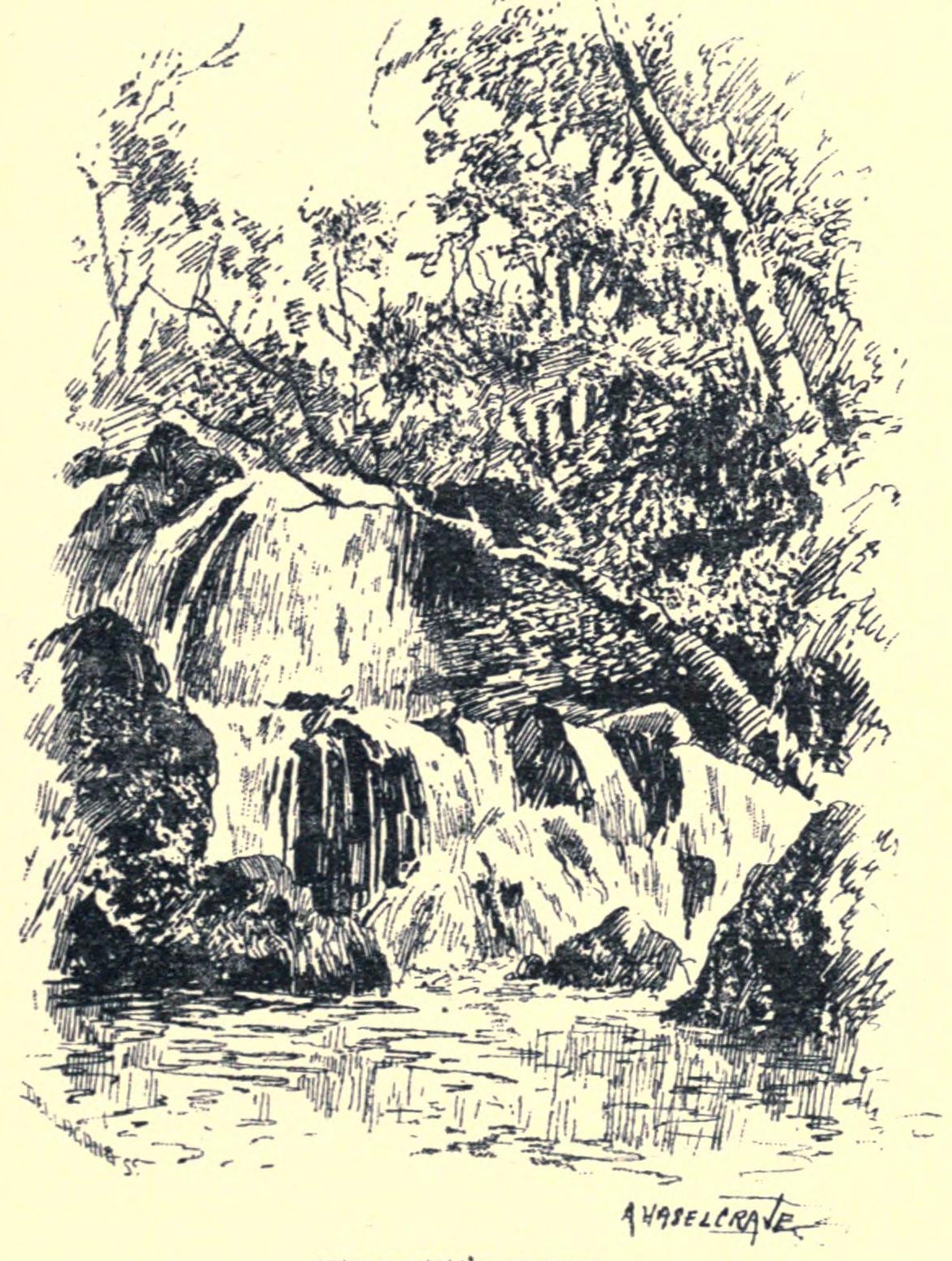
Jennett's Cove, A. Haselgrave. From Edmund Bogg, Higher Wharfeland: The Dale of Romance, from Ormscliffe to Cam Fell (York: John Sampson; London: John Heywood; Leeds: James Miles, 1904). See the page 2 · Janet's Foss · 0.9 miles
Read this aloud, or listen
People said a fairy queen lived at this waterfall. Her name was Janet. In 1891 Harry Speight called her Queen Janet, and wrote about her airy little people. Harry Speight called the little hole at the waterfall the Fairy Hole.
This story comes from Harry Speight, writing in 1891 and 1892, and the Brighouse Free Press and District Advertiser, in 1899.
When you get there Look for Janet's Cave. A newspaper in 1899 said it was on the other side of the water.
“to visit Gordale-scar ... I stay'd there (not without shuddering) a quarter of an hour, and thought my trouble richly paid”
Thomas Gray, 13 October 1769. See the page

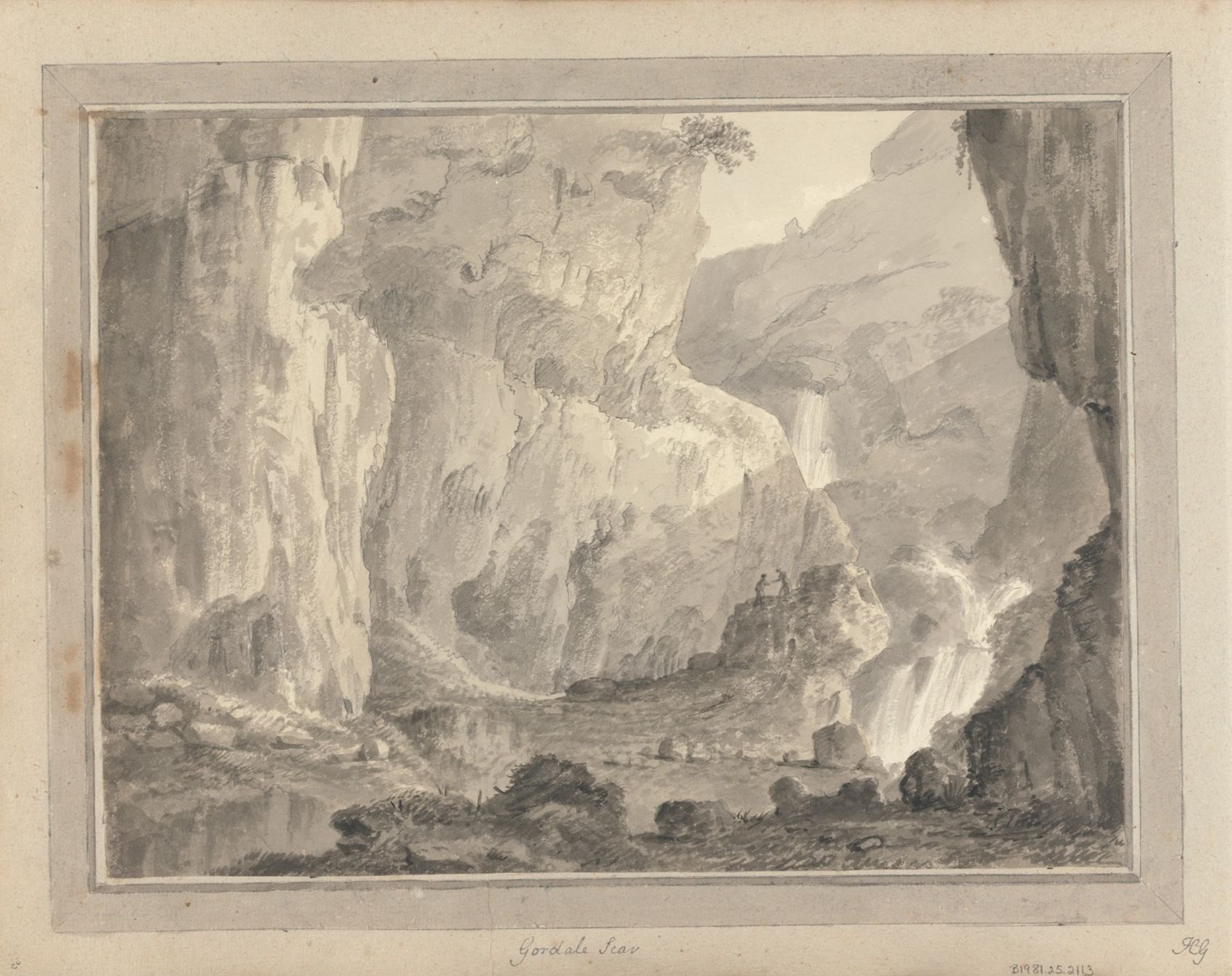
Views in England, Scotland and Wales: Gordale Scar, Amos Green, 19th century. Yale Center for British Art. Public domain (CC0 1.0). See the work 3 · Gordale Scar · 1.5 miles
Read this aloud, or listen
In 1769 the poet Thomas Gray stood under these cliffs. High above him, a goat danced and scratched its ear with its back foot. Gray said he would never have stood where that goat stood. He stayed there a quarter of an hour, shuddering. He said it was worth the trouble.
This story comes from Thomas Gray, writing in 1769.
When you get there Stand under the overhang and look up. Where could a goat stand up there?
“on the cliffs above hung a few goats : one of them danced and scratched an ear with its hind foot in a place where I would not have stood”
Thomas Gray, 13 October 1769. See the page
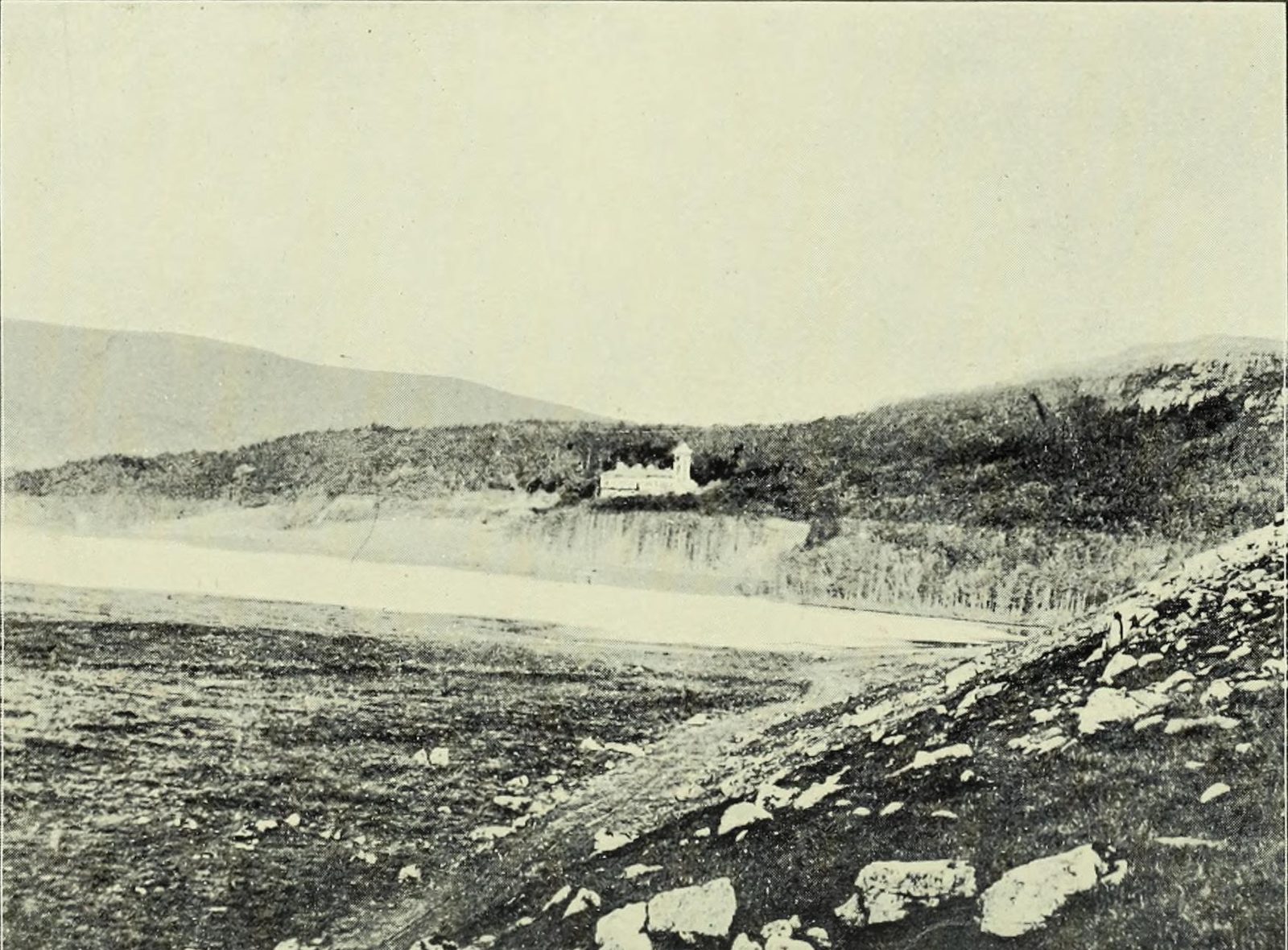
Malham Tarn, Mr. Lister of Malham (photograph). From Harry Speight, The Craven and North-West Yorkshire Highlands (London: Elliot Stock, 1892). See the page 4 · Malham Tarn · 3.5 miles
Read this aloud, or listen
This is a tarn, the old northern word for a small lake. It is high up in the hills. In 1773 Thomas Pennant saw the water flow out of it and sink straight into the ground. Old writers said its trout were huge.
This story comes from Thomas Dunham Whitaker, writing in 1805, Thomas Pennant, writing in 1773, John Housman, writing in 1800, and two more writers.
When you get there Look on the water for coots and ducks. Harry Speight saw coots, teals and mallards here in 1892.
“From Gordale we proceeded to a curious lake, called Maum or Malham-tarn, abounding with fine trout”
John Hutton, 1780. See the page
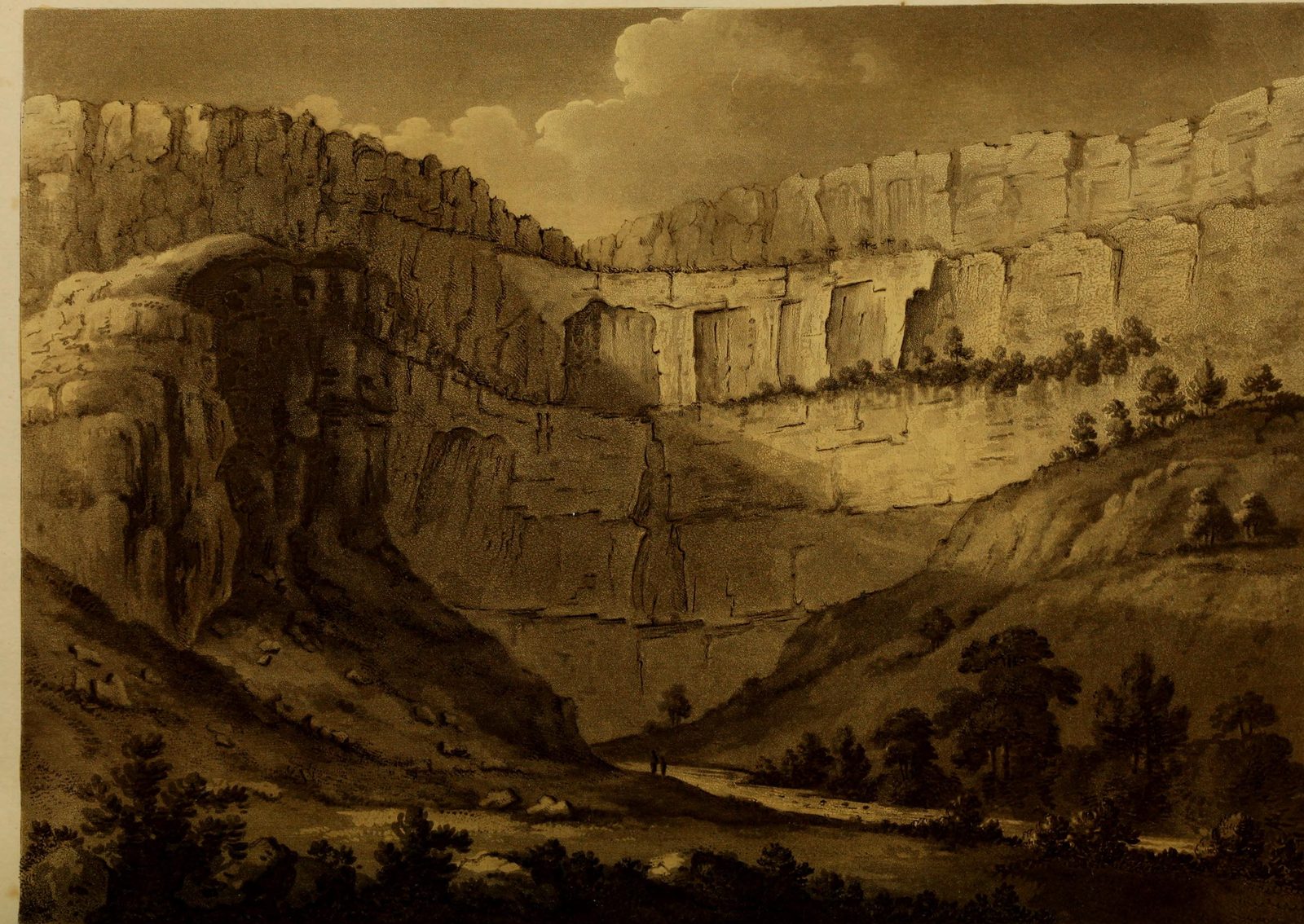
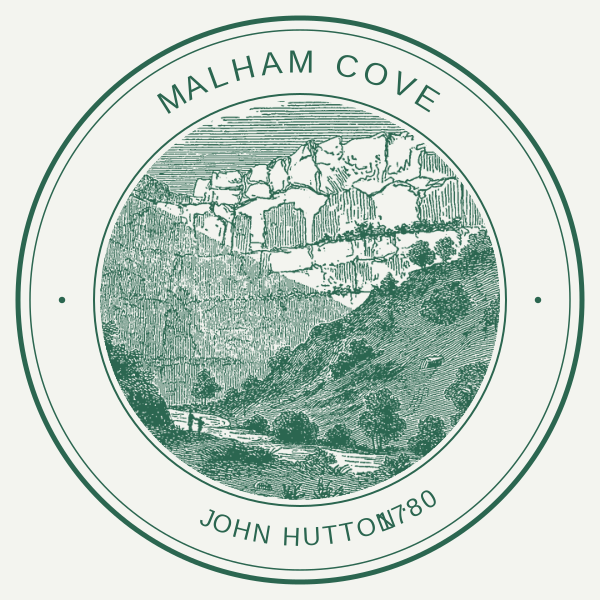
Malham Cove, The Rev. J. Griffith (drawing); S. Alken (aquatint). From Thomas Dunham Whitaker, The History and Antiquities of the Deanery of Craven (London, 1805). See the page 5 · Malham Cove · 5.6 miles
Read this aloud, or listen
The cliff in front of you is 286 feet high. Twice in forty years, the tarn up the hill flooded, and its water poured over the top of the cove. William Howson said the water turned into one huge cloud of spray before it reached the bottom.
This story comes from William Howson, writing in 1850, and John Phillips, writing in 1853.
When you get there Find where the water comes out from under the foot of the cliff. In 1853 John Phillips said the river starts here.
“there pours down a stupendous cataract, in height almost double that of Niagara.”
John Hutton, first printed 1780. See the page
Stamp it here uses your phone's location, on your phone only, and works within 200 m of the stop. Stamp it from home marks the stamp as collected from home. Route: © OpenStreetMap contributors. Heights: SRTM, through Open Topo Data. Walk with care, keep to the paths, and follow the Countryside Code.