UK · England · North Yorkshire · Craven · In Linton
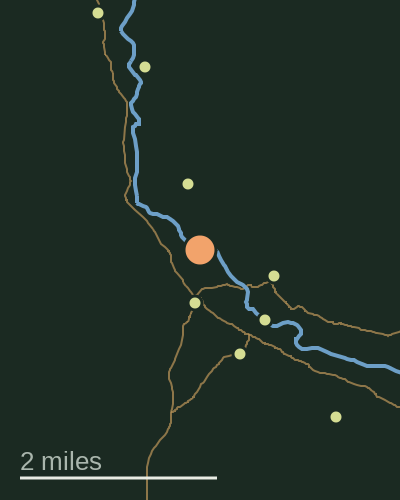
Linton Falls
What the writers say
Harker thinks Linton may take its name from these falls, from linn, a waterfall. Bogg saw the river here in flood and called it weird and savage.
-
1869
“"Linn," or "Lyn," (which means a cataract), and therefore may have its origin in the Falls of the Wharf”
Bailey John Harker, a Wharfedale man writing about his native valley. See the page
Source and note
Bailey John Harker, Rambles in Upper Wharfedale (Skipton, 1869), page 131.
Harker is explaining the name Linton. The scan garbles the word after Wharf, so the quote stops there.
-
1869
“wending its way from Ghaistrills to Grassington Bridge, and from thence to the Falls at Linton Mill”
Bailey John Harker, a Wharfedale man writing about his native valley. See the page
Source
Bailey John Harker, Rambles in Upper Wharfedale (Skipton, 1869).
-
1904
“Further upwards, at Linton Mills, the river presented a weird and savage appearance.”
Edmund Bogg, Leeds writer and walker of the dales. See the page
Source and note
Edmund Bogg, Higher Wharfeland: the Dale of Romance (York and London, 1904), page 240.
Bogg is describing the Wharfe in flood.